George Mitsikas, 16 December 2023
The trigger for writing this article was a recent study on overwintering ¹. The study, which is based solely on theoretical calculations, was widely circulated on websites and sparked mixed reactions in the beekeeping community. According to its author Derek Mitchell, the winter cluster formed by the bees favors significant heat loss, is stressful for the bees, and arises spontaneously from the instinct for survival against the cold. The researcher essentially vindicates many of the practices that add insulation to the hives. Although the study made controversial impressions, I believe Mitchell has captured what is really going on.
The phenomenon of winter clustering has concerned scientists and beekeepers. Winter clustering is an arrangement in which, under cold conditions, the outer bees are immobilized, align their bodies, and form a shell. Inside the shell, there are bees that warm the cluster with their thoracic muscles. Further inside, in the warm core, there are normal activities according to the season (brood rearing).
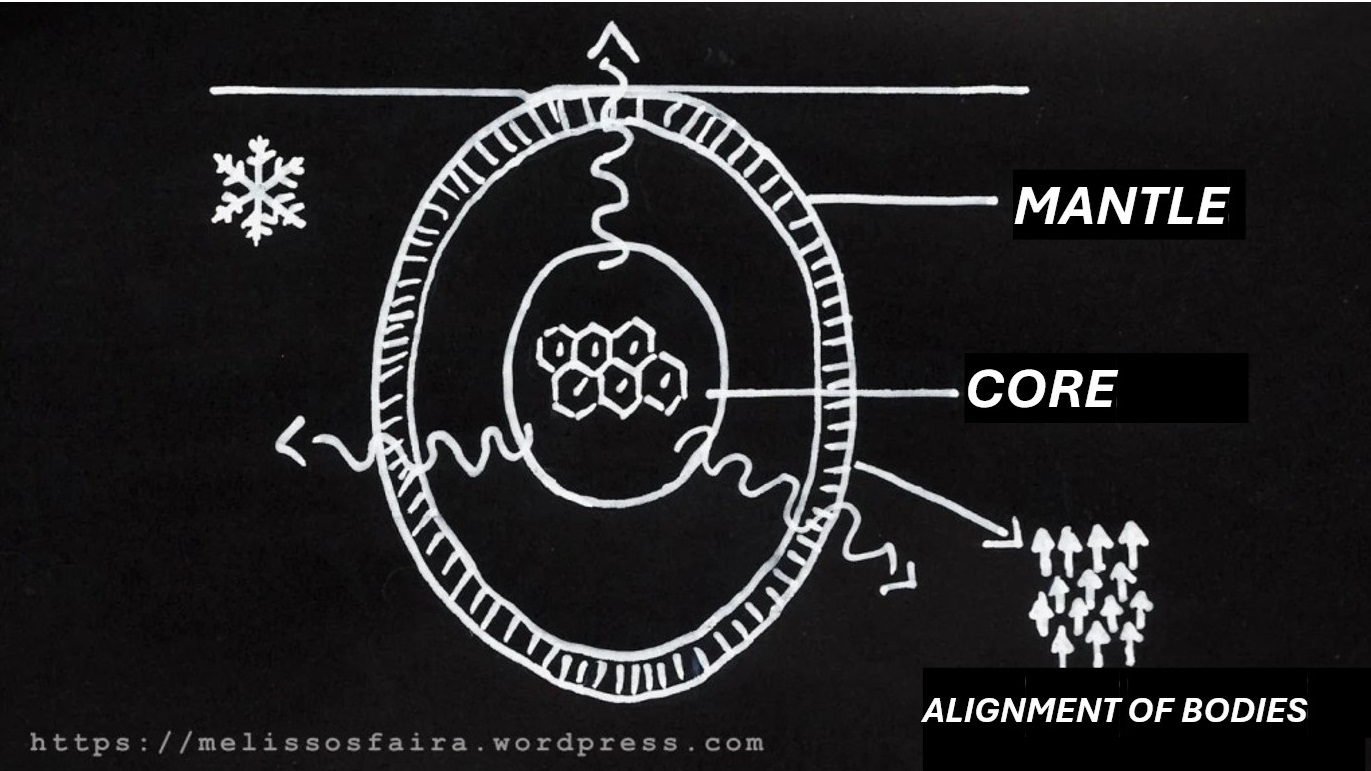
Image 1: Diagram of the cluster’s emergent structure.
Things in nature are often believed to have a level of sophistication or impenetrable meanings, so beekeepers and scientists have attributed special qualities to eusocial bees. Thus, the honey bee colony is often described as an orchestrated and sophisticated animal society, in which the bees perform task allocations (some bees seal cells, others warm them, others take care of the brood, etc.). All these social sub-structures are thought to communicate and coordinate through pheromones, etc. I will not elaborate further as there is a plethora of relevant information available on the internet.
Βeekeeping practices include specific beekeeping manipulations aimed at causing the beehive to cluster. The transportation of the hives to a cold location is indeed used as a management practice to combat varroa in Mediterranean climates with warm winters. Although there are no particularly extreme views prevailing in Greece, we encounter hardline beekeepers abroad who consider exposing the bees to the cold beneficial. Practices that involve adding numerous insulating materials are often considered to «hinder the natural state» or to «perpetuate maladapted and weak colonies». Finally, commercial beekeeping dismisses the use of excessive insulation for practical reasons (extra storage needs, labor hours, etc.).
Thermal Insulators and Conductors
In order to understand the complex situation prevailing during overwintering, the three ways in which heat is transferred from the beehive to the environment must be taken into account. The first way is through conduction, that is, through the stationary mass of the bees’ bodies when they come into contact. The second is through convection, that is, through the movement of the air circulating inside and around the hive, and finally, through thermal radiation (visible only with thermal cameras).
When it comes to heat conduction, the concept is simple: the lower the conductivity of a material, the better the insulation. This is evident in the table below, which shows which common materials in beekeeping act as insulators and which function as heat conductors.
| Material | Thermal Conductivity Watt/(m x K ) |
|---|---|
| Air, 27 οC, typical | 0.02614 |
| Foam, Extruded Polystyrene | 0.025- 0.040 |
| Foam, Expanded Polystyrene | 0.030 – 0.040 |
| Wood – dry Fir, 12% humidity 2 | 0.1152 |
| Plywood (950 kg/m3) | 0.16 |
| Wood – wet Fir 2 | 0.1904 |
| Nylon, typical (polyethylene, LDPE, 20 οC) | 0.34 |
| Honey 3 | 0.392 (± 0.62%) |
| Bee body | 0.5 |
| Water, 27 οC | 0.6084 |
| Ice, 0 οC | 2.1 |
The transfer of heat by convection is a more complex phenomenon as it involves the movement of fluids (liquids and gases). It is preferable to be explained with examples. For example, nylon, although it does not offer significant insulation, warms the beehive because it traps the hot air. A bee with a lot of fur has less heat loss than a hairless bee, as its fur traps the movement/flow of warm air towards the environment. Convection explains how the screened bottom boards have significant heat losses. Part of the warm air escapes from the bottom grid, even though the warm air has an upward tendency. Additionally, a cold air current from a light breeze can enter from below and move upwards. An advantage of the perforated bases is that when it rains, water does not accumulate underneath, as it happens when the slopes of the hive are not correct. A patent that combines insulation with air trapping is the widely used «foam»⁵.
Why does the cluster lose heat?
After describing the basic concepts, let’s move on to the main points of this study. In the study entitled «Honeybee cluster—not insulation but stressful heat sink», it is explained why the beehive loses large amounts of heat. In the beehive, as soon as the outer bees form a tight shell with their bodies, the slow heat loss through convection is reduced. Eventually, we have rapid heat loss of the sphere through conduction as the gap between the bees is minimized (reduction of the pore space). The means of heat transfer is no longer air, but the bodies of the bees with 19 times greater conductivity. The author thus challenges the model that requires bees to form an insulating layer with their bodies. The bees, in order to survive, gather close to the heat, evidently indifferent to what the optimal arrangement would be. It should be noted here that the “opposing” idea is not exactly as presented by Mitchell but instead is more refined⁴.
Another point described in the study is that the larger a cluster is, the more heat it loses (the loss is a function of the surface). On the other hand, we would add that the larger the mass of the sphere, the more heat it can contain since heat capacity is dependent on mass. As a rule, small animals lose heat faster than large ones. That is why smaller animals tend to have a faster metabolism, so to counterbalance their rapid heat losses. Consequently, there is a critical mass needed for a colony to survive the winter. If the bees actually formed an insulating shell with their bodies, then the lack of mass in the small beehives would be somewhat compensated, which is not the case.
Therefore, simple actions such as placing insulating material on top of the lid (or a plastic lid with built-in insulation) are the first, inexpensive things that can be done to avoid large heat losses during management. This also prevents the lid from getting wet due to temperature differences. It makes no sense to go into the type/amount of insulation to be used, as this is a region specific and practical issue.
Emergent Properties
The conclusion of Mitchell’s study reminded me of a lecture by entomology professor Keith Delaplane. Referring to the «emergent properties» of a collective, Delaplane provided a simple example in which the audience can spontaneously form a «human winter cluster».
Video 1: Extract about emergence starts at 22:00
It is enough for the number of individuals and the external conditions to exist, and it is guaranteed that a «mechanism» will emerge without special effort. In biology, there are countless phenomena of self-organization without coordination or purpose. Many of the basic functions of eusocial bees are results of emergent properties⁶ ⁷. We should not misunderstand the idea of emergent properties and think of the beehive as a blob that the bees form because they are cold. On the contrary, emergent properties tell us that a complex structure arises from the dense aggregation of bees unintentionally.
The Threat of Winter
It is generally accepted that honey bees are not threatened by cold per se, which is why the analogy of the «smart survival machine» easily finds acceptance. However, if a colony’s population is below the critical mass mentioned earlier, then the colony is clearly threatened. Of course, in beekeeping, there are more immediate threats (varroa, enemies, humidity, etc.), but the fact that a colony withstands the cold does not mean it becomes stronger, nor that it does not expend large amounts of energy. As several studies show (including Mitchell’s study), the energy losses from exposure to cold are significant and come with a high economic cost. Perhaps the famines that we often see at the end of winter are nothing but a consequence of the large energy losses that have preceded them?
A technique to reduce energy losses is widely used in Greece and involves leaving only 5 or 6 frames in the hive and pack them with insulating boards Dow or Fibran «wedges» below the beehive «ceiling» (wax-cloth, etc). This is an efficient practice that was popularized by Greek beekeeper Moschos Dionias. A variation of this practice is to keep more frames in, calculate the volume encased by the colony, and insert either an insulation sheet or plywood, like a wedge (image 2). This manipulation requires experience to execute, as it may cut off some colonies from their food stores. Additionally, an intervention is necessary at the end of winter to move the insulation one or two positions outwards.

Image 2: Taken while clustering, we see a confinement manipulation in a cluster that occupies 5 frames, but in the warmer days it may extend to over 7 frames. On the contrary, leaving only 5-6 frames in the hives would generate more work in the warehouse and additional routes to the apiary in the spring.
Deliberate cold exposure
Often, we observe something that appears contradictory to the above. That colonies that have wintered in cold locations (by Greek standards), or in mountainous areas, come out of winter more vigorous compared to the rest. But there is no paradox here. It is just that exposure to the cold coincides with the reduced photoperiod, the reduction of activity in the hive, and longer resting periods. The last three factors are beneficial.
As initially mentioned, exposure to colder temperatures can be utilized in the warmer regions of Greece for an effective intervention against varroa. This is done by transferring to higher altitudes in October and November and by delaying the application of insulating foam. The manipulation must coincide with the diapause caused by the approaching photoperiod and the queen’s circannual rhythm (the annual biological clock). Nevertheless, intentional exposure to the cold after the winter solstice (December 20th) does not offer any value for treatment interventions in any part of Greece.
George Mitsikas (chemist, amateur beekeeper)
16 December 2023
REFERENCES
- Mitchell D. 2023 Honeybee cluster—not insulation but stressful heat sink. J. R. Soc. Interface 20: 20230488.
https://doi.org/10.1098/rsif.2023.0488 - Kastamonu Üni., Orman Fakültesi Dergisi, 2012, Özel Sayı: 121-123 Kastamonu Univ., Journal of Forestry Faculty, 2012, Special Issue
- Thermal Properties of Selected Bee Products Progress in Agricultural Engineering Sciences 14(2018)S1, 37–44DOI: 10.1556/446.14.2018.S1.4
- Because it argues that the insulation of the mantle is due to the bees’ fur, retention of porosity, and trapping of warm air.
- A DIY insulating sheet popular in Greece made by Heavy-Duty greenhouse plastic sheets and cheap foam sheets.
- Almeida, E. A., & Porto, D. S. (2014). Investigating eusociality in bees while trusting the uncertainty. Sociobiology, 61(4), 355-368.
- Delaplane, K. S. (2017). Emergent properties in the honey bee superorganism. Bee World, 94(1), 8-15.
 The Beekeeping Lab
Leave a comment